 |
Ugali/Posho and Cabbages
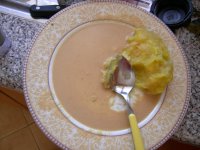
Ugali - usually from maize but also other starches, regional names include posho and kwon. Ugandan expatriates make ugali from cornmeal, masa harina or grits. Kwon is a sort of ugali made from millet but in other regions like eastern Uganda they include cassava flour
Ugandan cooking lesson Posho/UgaliAnother staple food of Uganda is posho (called ugali in Swahili), an almost-bread made out of maize (corn) flour and water. Unfortunately, like many things that are cooked here, there isn't an exact recipe for it. But here is my general directions for it:1. Boil some water2. Mix the same amount of maize flour as water you are boiling with about half as much water3. Once the water boils, mix the maize paste in and stir for a long time until it gets thick4. Steam the resulting mixture until it gets firm - this can be done by wrapping it in banana leaves, but if you don't have those, you can do my baking method - put some water in a big pot, then put a smaller pot containing the posho inside, cover the big pot, and boil until the posho is doneNot particularly detailed, I know, but that's how to cook Ugandan style
As
you can see, posho is covered with a sauce similar to what you can do
for matooke - this one is beans, carrots, and onions. Of course peanut
butter sauce is great too.
|
Saturday, 7 September 2013
how posho/ugali as its called in swahill prepared


Roasted Chicken in Uganda
 |
Roasted Chicken
just ready to be eaten....the way to prepare its just simple...those who have tried a BBQ know how to deal with this....
|
SWEETPOTATO IN UGANDA AS ANOTHER DELICIOUS AND COMMON FOOD THAT PEOPLE EAT.
SWEETPOTATO IN UGANDA AS ANOTHER DELICIOUS AND COMMON FOOD THAT PEOPLE EAT.
In Uganda, sweet potato is a major staple food. Most of the production is from small-scale farmers. The crop is extensively marketed but commercialization is more intensive in and around urban areas where prices compare well with those of other crops. Significant market activity also takes place in rural areas although prices here are low. The marketing of sweet potato is still constrained by factors such as its bulkiness and perishability, poor means of transport, lack of or poor roads, poor storage, poor marketing information system, and absence of processing. These factors are partly responsible for the high price margins observed. The national demand for sweet potato is high and increasing and the income elasticity of sweet potato is positive. Even under low levels of use of external inputs, the profitability of sweet potato is high and could more than double where improved technology is used. The competitiveness index of sweet potato in Uganda is slightly above that of cassava but lower than for bananas. Uganda thus has a comparative advantage in sweet potato production.
its mainly grown in Kabaale (western Uganda) and also in Buganda which is the central.
their also different types of sweet potatoes. as can be shown below.
SWEETPOTATO IN GARDEN

ON DISPLAY

IN THE MARKET FOR SALE


Harvesting


A biofortified new strain of sweet potato is being piloted by Self Help Africa in Uganda, in a bid to combat health problems resulting from vitamin deficiency in the local population.
Farmers in Kayunga district are taking part in trial production of a beta-carotene enriched orange-fleshed sweet potato (OFSP) – a food crop with the potential to combat widespread
Vitamin A deficiency in the region.
One of just a few food crops that can provide high quantities of beta-carotene, which is converted to Vitamin A in the body, the orange-fleshed sweet potato was introduced by Self Help Africa for field testing to around 375 households in Kayunga last year.
Sweet potato is a common staple food in most Ugandan households, but the traditional white-fleshed variety of the tuber remains the more popular – for reasons of both availability and tradition, although it lacks the same nutritional value.
The orange-fleshed sweet potato piloted by Self Help Africa has been developed at the Ugandan National Crops Resources Research Institute, whose research director, Dr. Gorrettie Ssemakula, explained that NASPOT 8 plants were used because of the added fortification with beta-carotene.
Keelin Tobin, a UCC student who researched the project during a development internship with Self Help Africa, said the Kayunga field trials had answered many questions, but that a number of issues still needed to be addressed if the crop was to be adopted more widely by rural farmers.
“As things stand, the amount of Vitamin A content in the crop variety is not the primary concern to farmers - yields are,” she said. Villagers in Kyato who were involved with the trial told her that the survival of stored orange-fleshed sweet potato vines between one planting season and the next was one of the challenges that they faced...
“This was partly to do with the fact thatthere was a particularly dry season this year,”
she said.
Dr. Ssemakula of NaCRRI believes that the key to the sustainable production of the new crop will be the development of planting opportunities in wetland areas, and the establishment of a local commercial enterprise that can produce and sell the vines. But Keelin Tobin reckons that an effective information campaign will also need to be mounted if the orange variety of sweet potato is to be used.
“The health and nutritional benefits of eating a more enriched variety of sweet potato will only be seen by people in the longer term. Information leaflets, recipes and other education and training are needed, while the access that Self Help Africa has to local farmer radio can be effective ways of raising awareness", she says.
“Self Help Africa currently participates in programmes on Victoria FM local radio, providing instruction to farming communities on crop storage, plant disease and other topics, and this will also be a valuable medium to raise awareness of the issues surrounding the sweet potato. - See more at: http://www.selfhelpafrica.org/selfhelp/Main/NEWS-uganda-orangepotato.htm#sthash.xi86XCnB.dpuf
A biofortified new strain of sweet potato is being piloted by Self Help Africa in Uganda, in a bid to combat health problems resulting from vitamin deficiency in the local population.
Farmers in Kayunga district are taking part in trial production of a beta-carotene enriched orange-fleshed sweet potato (OFSP) – a food crop with the potential to combat widespread
Vitamin A deficiency in the region.
One of just a few food crops that can provide high quantities of beta-carotene, which is converted to Vitamin A in the body, the orange-fleshed sweet potato was introduced by Self Help Africa for field testing to around 375 households in Kayunga last year.
Sweet potato is a common staple food in most Ugandan households, but the traditional white-fleshed variety of the tuber remains the more popular – for reasons of both availability and tradition, although it lacks the same nutritional value.
The orange-fleshed sweet potato piloted by Self Help Africa has been developed at the Ugandan National Crops Resources Research Institute, whose research director, Dr. Gorrettie Ssemakula, explained that NASPOT 8 plants were used because of the added fortification with beta-carotene.
Keelin Tobin, a UCC student who researched the project during a development internship with Self Help Africa, said the Kayunga field trials had answered many questions, but that a number of issues still needed to be addressed if the crop was to be adopted more widely by rural farmers.
“As things stand, the amount of Vitamin A content in the crop variety is not the primary concern to farmers - yields are,” she said. Villagers in Kyato who were involved with the trial told her that the survival of stored orange-fleshed sweet potato vines between one planting season and the next was one of the challenges that they faced...
“This was partly to do with the fact thatthere was a particularly dry season this year,”
she said.
Dr. Ssemakula of NaCRRI believes that the key to the sustainable production of the new crop will be the development of planting opportunities in wetland areas, and the establishment of a local commercial enterprise that can produce and sell the vines. But Keelin Tobin reckons that an effective information campaign will also need to be mounted if the orange variety of sweet potato is to be used.
“The health and nutritional benefits of eating a more enriched variety of sweet potato will only be seen by people in the longer term. Information leaflets, recipes and other education and training are needed, while the access that Self Help Africa has to local farmer radio can be effective ways of raising awareness", she says.
“Self Help Africa currently participates in programmes on Victoria FM local radio, providing instruction to farming communities on crop storage, plant disease and other topics, and this will also be a valuable medium to raise awareness of the issues surrounding the sweet potato. - See more at: http://www.selfhelpafrica.org/selfhelp/Main/NEWS-uganda-orangepotato.htm#sthash.xi86XCnB.dpuf
A biofortified new strain of sweet potato is being piloted by Self Help Africa in Uganda, in a bid to combat health problems resulting from vitamin deficiency in the local population.
Farmers in Kayunga district are taking part in trial production of a beta-carotene enriched orange-fleshed sweet potato (OFSP) – a food crop with the potential to combat widespread
Vitamin A deficiency in the region.
One of just a few food crops that can provide high quantities of beta-carotene, which is converted to Vitamin A in the body, the orange-fleshed sweet potato was introduced by Self Help Africa for field testing to around 375 households in Kayunga last year.
Sweet potato is a common staple food in most Ugandan households, but the traditional white-fleshed variety of the tuber remains the more popular – for reasons of both availability and tradition, although it lacks the same nutritional value.
The orange-fleshed sweet potato piloted by Self Help Africa has been developed at the Ugandan National Crops Resources Research Institute, whose research director, Dr. Gorrettie Ssemakula, explained that NASPOT 8 plants were used because of the added fortification with beta-carotene.
Keelin Tobin, a UCC student who researched the project during a development internship with Self Help Africa, said the Kayunga field trials had answered many questions, but that a number of issues still needed to be addressed if the crop was to be adopted more widely by rural farmers.
“As things stand, the amount of Vitamin A content in the crop variety is not the primary concern to farmers - yields are,” she said. Villagers in Kyato who were involved with the trial told her that the survival of stored orange-fleshed sweet potato vines between one planting season and the next was one of the challenges that they faced...
“This was partly to do with the fact thatthere was a particularly dry season this year,”
she said.
Dr. Ssemakula of NaCRRI believes that the key to the sustainable production of the new crop will be the development of planting opportunities in wetland areas, and the establishment of a local commercial enterprise that can produce and sell the vines. But Keelin Tobin reckons that an effective information campaign will also need to be mounted if the orange variety of sweet potato is to be used.
“The health and nutritional benefits of eating a more enriched variety of sweet potato will only be seen by people in the longer term. Information leaflets, recipes and other education and training are needed, while the access that Self Help Africa has to local farmer radio can be effective ways of raising awareness", she says.
“Self Help Africa currently participates in programmes on Victoria FM local radio, providing instruction to farming communities on crop storage, plant disease and other topics, and this will also be a valuable medium to raise awareness of the issues surrounding the sweet potato. - See more at: http://www.selfhelpafrica.org/selfhelp/Main/NEWS-uganda-orangepotato.htm#sthash.xi86XCnB.dpuf
In Uganda, sweet potato is a major staple food. Most of the production is from small-scale farmers. The crop is extensively marketed but commercialization is more intensive in and around urban areas where prices compare well with those of other crops. Significant market activity also takes place in rural areas although prices here are low. The marketing of sweet potato is still constrained by factors such as its bulkiness and perishability, poor means of transport, lack of or poor roads, poor storage, poor marketing information system, and absence of processing. These factors are partly responsible for the high price margins observed. The national demand for sweet potato is high and increasing and the income elasticity of sweet potato is positive. Even under low levels of use of external inputs, the profitability of sweet potato is high and could more than double where improved technology is used. The competitiveness index of sweet potato in Uganda is slightly above that of cassava but lower than for bananas. Uganda thus has a comparative advantage in sweet potato production.
its mainly grown in Kabaale (western Uganda) and also in Buganda which is the central.
their also different types of sweet potatoes. as can be shown below.
SWEETPOTATO IN GARDEN
ON DISPLAY
IN THE MARKET FOR SALE
Harvesting
Orange potato to save lives
A biofortified new strain of sweet potato is being piloted by Self Help Africa in Uganda, in a bid to combat health problems resulting from vitamin deficiency in the local population.
Farmers in Kayunga district are taking part in trial production of a beta-carotene enriched orange-fleshed sweet potato (OFSP) – a food crop with the potential to combat widespread
Vitamin A deficiency in the region.
One of just a few food crops that can provide high quantities of beta-carotene, which is converted to Vitamin A in the body, the orange-fleshed sweet potato was introduced by Self Help Africa for field testing to around 375 households in Kayunga last year.
Sweet potato is a common staple food in most Ugandan households, but the traditional white-fleshed variety of the tuber remains the more popular – for reasons of both availability and tradition, although it lacks the same nutritional value.
The orange-fleshed sweet potato piloted by Self Help Africa has been developed at the Ugandan National Crops Resources Research Institute, whose research director, Dr. Gorrettie Ssemakula, explained that NASPOT 8 plants were used because of the added fortification with beta-carotene.
Keelin Tobin, a UCC student who researched the project during a development internship with Self Help Africa, said the Kayunga field trials had answered many questions, but that a number of issues still needed to be addressed if the crop was to be adopted more widely by rural farmers.
“As things stand, the amount of Vitamin A content in the crop variety is not the primary concern to farmers - yields are,” she said. Villagers in Kyato who were involved with the trial told her that the survival of stored orange-fleshed sweet potato vines between one planting season and the next was one of the challenges that they faced...
“This was partly to do with the fact thatthere was a particularly dry season this year,”
she said.
Dr. Ssemakula of NaCRRI believes that the key to the sustainable production of the new crop will be the development of planting opportunities in wetland areas, and the establishment of a local commercial enterprise that can produce and sell the vines. But Keelin Tobin reckons that an effective information campaign will also need to be mounted if the orange variety of sweet potato is to be used.
“The health and nutritional benefits of eating a more enriched variety of sweet potato will only be seen by people in the longer term. Information leaflets, recipes and other education and training are needed, while the access that Self Help Africa has to local farmer radio can be effective ways of raising awareness", she says.
“Self Help Africa currently participates in programmes on Victoria FM local radio, providing instruction to farming communities on crop storage, plant disease and other topics, and this will also be a valuable medium to raise awareness of the issues surrounding the sweet potato. - See more at: http://www.selfhelpafrica.org/selfhelp/Main/NEWS-uganda-orangepotato.htm#sthash.xi86XCnB.dpuf
How to Cook Sweet Potatoes
First am to show you how other people prepare it which is not cheap because of the things needed in the preparation as shown below
Sweet potatoes are sweeter and, in some ways, more healthy than regular potatoes.You can cook them using many of the same methods you can use to make regular potatoes, such as boiling them or cooking them in the oven or microwave. For a more tender treat, you can even mash the sweet potatoes. If you want to know how to cook sweet potatoes in a variety of tasty ways, just follow these steps
Edit Ingredients
Oven Baked Sweet Potatoes
- 8 unpeeled medium sweet potatoes
- 8 tbsp. of butter
- Salt to taste
- Pepper to taste
Microwave Baked Sweet Potatoes
- 8 unpeeled medium sweet potatoes
- 8 tbsp. of butter
- Salt to taste
- Pepper to taste
Slow Cooked Sweet Potatoes
- 8 unpeeled medium sweet potatoes
- 6 tbsp. of butter
- 1/4 to 1/2 cup (60 to 120 ml) water
- Salt to taste
- Pepper to taste
Mashed Sweet Potatoes
- 8 peeled medium sweet potatoes
- 1/4 to 1/2 cup (60 to 125 ml) butter
- Salt to taste
- Pepper to taste
- 1/3 cup (80 ml) sour cream
- 1/4 cup (60 ml) milk
Edit Steps
Oven Baked Sweet Potatoes[2]
- 1Preheat the oven to 400°F (°C). Line a rimmed baking sheet with nonstick aluminum foil.
- 2Scrub the skin of the potatoes clean. Use a vegetable brush and running water to remove any dirt and grime off the skin of the sweet potatoes.
- 3Pierce the exterior of each sweet potato. Use the tines of a fork to make holes in the skin of each potato, piercing the potato three or four times. Place the pierced sweet potatoes on the prepared baking sheet.
- 4Bake the uncovered sweet potatoes in the oven. The sweet potatoes need to bake until they become tender, which will usually take between 45 - 60 minutes.
- 5Soften the flesh. Place each sweet potato inside a clean kitchen towel. Roll the potato on the counter, pressing on it gently. Doing so loosens the flesh inside.
- 6Cut open each sweet potato. Use a knife to slit open each potato from one end to the other.
- 7Serve the sweet potatoes hot with butter, salt, and pepper. Each sweet potato should be topped with about 1 tbsp. (15 ml) of butter. Add salt and pepper to taste.


Microwave Baked Sweet Potatoes[3]
- 1Scrub the sweet potatoes clean. Wash the exterior of each sweet potato under running water, using a vegetable brush to remove any stubborn dirt.
- 2Pierce the skin. Poke into each sweet potato three to five times with the tines of a fork.
- 3Place the sweet potatoes in a microwave-safe dish. You can also use a microwave-safe plate with a rim. Do not cover.
- 4Microwave the sweet potatoes until tender. Set the microwave on full power and cook for 8 to 10 minutes. Pause the microwave halfway in between to flip and rotate the sweet potatoes to ensure even cooking.
- 5Slice open each sweet potato. Cut an "X" in the top of each potato and gently press on the sides of the skin to push the flesh upward.
- 6Serve with butter. Use about 1 Tbsp. (15 ml) of butter per sweet potato. Add salt and pepper to taste.


Slow Cooked Sweet Potatoes
- 1Wash the sweet potatoes. Scrub the skin with a vegetable brush under running water.
- 2Poke holes in the skin. Use the tines of a fork to pierce the outside of each sweet potato several times, covering the exterior in tiny holes.
- 3Place the sweet potatoes into a 5 or 6 quart (5 or 6 liter) slow cooker. The sweet potatoes can be piled up near the top, but you should still be able to cover the slow cooker with a lid without any difficulty.
- 4Add 1/4 to 1/2 cup (60 to 120 ml) water to the slow cooker. A little water will help the sweet potatoes cook better, but there should not be enough water to cover them. You do not want them to boil in the slow cooker. Instead, the water is there to prevent the sweet potatoes from drying out and potentially burning.
- 5Cook the sweet potatoes for 4 to 6 hours. Cover the slow cooker and set the heat to low, cooking the sweet potatoes until they become tender.
- 6Slice open and serve. Cut the sweet potatoes open with a knife or fork. They should be tender enough to fall apart without needing to loosen the flesh using other techniques. Add 6 tbsp. of butter and salt and pepper to taste before serving.


Mashed Sweet Potatoes[4]
- 1Peel and cube the sweet potatoes. Use a vegetable peeler to remove the skin from each sweet potato. Cut each one into 1/2-in. (1.27-cm) cubes. Place these cubes in a colander and rinse with running water to remove any traces of dirt.
- 2Transfer the sweet potato cubes into a 4 quart (4 liter) pot. Fill the pot with enough water to cover the cubes. Add a dash of salt to the water.
- 3Boil the sweet potatoes for 12 minutes. You can add a pinch of salt to the pot if you like. Cover the pot and heat the water and cubed sweet potatoes over medium-high to high heat, until they feel tender when pierced with a fork.
- 4Drain the water. Pour the contents of the pot through a colander. Separate the water out and return the potatoes to the pot.
- 5Add the butter to the sweet potatoes. You can add anywhere from 1/4 to 1/2 cup (60 to 125 ml) of butter, depending on how creamy you want the mashed sweet potatoes to be. Allow the butter to sit on the hot sweet potatoes until it melts, stirring as necessary to speed up the melting process.
- 6Mash the sweet potatoes with a potato masher. Smash the sweet potatoes and butter together using the masher until the mixture becomes smooth.
- If you do not have a potato masher, you can also use a hand-held electric mixer.
- 7Add the remaining ingredients. Stir in 1/3 cup (80 ml) of sour cream and 1/4 cup (60 ml) of milk and add salt and pepper to taste. Continue stirring with a large spoon or fork until the mixture is creamy and thoroughly combined.
- 8Return the pot to the oven. Cook the mashed sweet potatoes over low heat, stirring frequently, until the sweet potatoes are heated through. Then, serve them while they're hot.
In Uganda u can use the same procedure as used when cooking or preparing matooke..check on the previous posts..of Sept-7th 2013


Orange potato to save lives
A biofortified new strain of sweet potato is being piloted by Self Help Africa in Uganda, in a bid to combat health problems resulting from vitamin deficiency in the local population.
Farmers in Kayunga district are taking part in trial production of a beta-carotene enriched orange-fleshed sweet potato (OFSP) – a food crop with the potential to combat widespread
Vitamin A deficiency in the region.
One of just a few food crops that can provide high quantities of beta-carotene, which is converted to Vitamin A in the body, the orange-fleshed sweet potato was introduced by Self Help Africa for field testing to around 375 households in Kayunga last year.
Sweet potato is a common staple food in most Ugandan households, but the traditional white-fleshed variety of the tuber remains the more popular – for reasons of both availability and tradition, although it lacks the same nutritional value.
The orange-fleshed sweet potato piloted by Self Help Africa has been developed at the Ugandan National Crops Resources Research Institute, whose research director, Dr. Gorrettie Ssemakula, explained that NASPOT 8 plants were used because of the added fortification with beta-carotene.
Keelin Tobin, a UCC student who researched the project during a development internship with Self Help Africa, said the Kayunga field trials had answered many questions, but that a number of issues still needed to be addressed if the crop was to be adopted more widely by rural farmers.
“As things stand, the amount of Vitamin A content in the crop variety is not the primary concern to farmers - yields are,” she said. Villagers in Kyato who were involved with the trial told her that the survival of stored orange-fleshed sweet potato vines between one planting season and the next was one of the challenges that they faced...
“This was partly to do with the fact thatthere was a particularly dry season this year,”
she said.
Dr. Ssemakula of NaCRRI believes that the key to the sustainable production of the new crop will be the development of planting opportunities in wetland areas, and the establishment of a local commercial enterprise that can produce and sell the vines. But Keelin Tobin reckons that an effective information campaign will also need to be mounted if the orange variety of sweet potato is to be used.
“The health and nutritional benefits of eating a more enriched variety of sweet potato will only be seen by people in the longer term. Information leaflets, recipes and other education and training are needed, while the access that Self Help Africa has to local farmer radio can be effective ways of raising awareness", she says.
“Self Help Africa currently participates in programmes on Victoria FM local radio, providing instruction to farming communities on crop storage, plant disease and other topics, and this will also be a valuable medium to raise awareness of the issues surrounding the sweet potato. - See more at: http://www.selfhelpafrica.org/selfhelp/Main/NEWS-uganda-orangepotato.htm#sthash.xi86XCnB.dpuf
Orange potato to save lives
A biofortified new strain of sweet potato is being piloted by Self Help Africa in Uganda, in a bid to combat health problems resulting from vitamin deficiency in the local population.
Farmers in Kayunga district are taking part in trial production of a beta-carotene enriched orange-fleshed sweet potato (OFSP) – a food crop with the potential to combat widespread
Vitamin A deficiency in the region.
One of just a few food crops that can provide high quantities of beta-carotene, which is converted to Vitamin A in the body, the orange-fleshed sweet potato was introduced by Self Help Africa for field testing to around 375 households in Kayunga last year.
Sweet potato is a common staple food in most Ugandan households, but the traditional white-fleshed variety of the tuber remains the more popular – for reasons of both availability and tradition, although it lacks the same nutritional value.
The orange-fleshed sweet potato piloted by Self Help Africa has been developed at the Ugandan National Crops Resources Research Institute, whose research director, Dr. Gorrettie Ssemakula, explained that NASPOT 8 plants were used because of the added fortification with beta-carotene.
Keelin Tobin, a UCC student who researched the project during a development internship with Self Help Africa, said the Kayunga field trials had answered many questions, but that a number of issues still needed to be addressed if the crop was to be adopted more widely by rural farmers.
“As things stand, the amount of Vitamin A content in the crop variety is not the primary concern to farmers - yields are,” she said. Villagers in Kyato who were involved with the trial told her that the survival of stored orange-fleshed sweet potato vines between one planting season and the next was one of the challenges that they faced...
“This was partly to do with the fact thatthere was a particularly dry season this year,”
she said.
Dr. Ssemakula of NaCRRI believes that the key to the sustainable production of the new crop will be the development of planting opportunities in wetland areas, and the establishment of a local commercial enterprise that can produce and sell the vines. But Keelin Tobin reckons that an effective information campaign will also need to be mounted if the orange variety of sweet potato is to be used.
“The health and nutritional benefits of eating a more enriched variety of sweet potato will only be seen by people in the longer term. Information leaflets, recipes and other education and training are needed, while the access that Self Help Africa has to local farmer radio can be effective ways of raising awareness", she says.
“Self Help Africa currently participates in programmes on Victoria FM local radio, providing instruction to farming communities on crop storage, plant disease and other topics, and this will also be a valuable medium to raise awareness of the issues surrounding the sweet potato. - See more at: http://www.selfhelpafrica.org/selfhelp/Main/NEWS-uganda-orangepotato.htm#sthash.xi86XCnB.dpuf
How to Cook Matoke (Plantains) the Ugandan Way
MATOOKE (STAPLE FOOD IN BUGANDA)
Matoke is a staple in Uganda and served in almost every home. Matoke, or plantains, look like green bananas and grow in bunches on trees. However, unlike bananas, matoke is fairly hard before it is cooked and is not very sweet. To soften the plantains, Ugandans often boil or steam the fruit.
Now in the fig below Some women are peeling matooke.....(bananas)
its got different ways of preparing it...foristance


1. Peel the plantains, and slice into chunks.
Boiling Matoke
step 1: get some green matooke bananas and 1 big banana leaf.
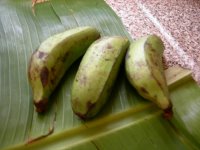
step 2: peel (with a knife and oiled hands, they don’t peel easily and have sticky sap) and place in pan with enough water to cover. put lid on and boil until water is gone.
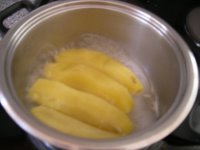
step 3: mash the softened bananas with a wooden spoon into paste over a hot stove.

step 4: place the mashed banana on clean banana leaf. fold into packet.
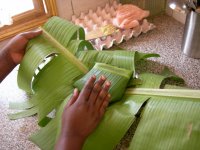
step 5: ready the pot used to boil bananas with cut banana stem. stack the cut banana leaf stem in the pan. fill pan with water to top of stem sections, then place wrapped mashed banana on this. this is the matooke steamer.

step 6: steam the matooke until the water is dry. the leaves will turn deep green. our matooke is almost ready!
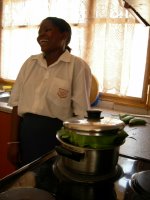
step 7: unfold the leaves, and discover matooke is done! now, place on plate with groundnut sauce (ground peanuts and a little hot water, like thin peanut butter)
the matooke master: annet!

the first bite! yum!

the good thing with Matooke, it does not discriminate source...its good with g-nuts, beans, chicken, meat/beef, fresh fish, and all the rest u can think of.
NOTE: however their are so many ways to prepare or cook Green Bananas
ope to get followers..because i got a lot to share with you regarding foods uganda and Africa at large as a continent. enjoy...................
Matoke is a staple in Uganda and served in almost every home. Matoke, or plantains, look like green bananas and grow in bunches on trees. However, unlike bananas, matoke is fairly hard before it is cooked and is not very sweet. To soften the plantains, Ugandans often boil or steam the fruit.
Now in the fig below Some women are peeling matooke.....(bananas)
its got different ways of preparing it...foristance
Instructions :Steaming
1. Peel the plantains, and slice into chunks.
2. Wrap the fruit in the leaves.
3. Place a small amount of water in a cooking pot. Add the stalks as a
foundation for the leaf packs to set on in the pot. Place the pot on the
stove
4. Steam the matoke for a few hours until tender.
5. Squeeze the matoke while still wrapped in the leaves to mash the fruit. Serve the matoke on fresh leaves
Boiling Matoke
6. Peel the plantains, and slice into chunks. Sprinkle with lemon juice.
7. Heat oil in a large frying pan. Add sliced onions, peppers and garlic.
Cook until tender. Add salt, pepper or coriander to taste.
8. Add stew meat or beef broth. Cook until meat is almost done.
9. Add plantains. Cover and simmer over low heat until plantains are tender.
step 1: get some green matooke bananas and 1 big banana leaf.

step 2: peel (with a knife and oiled hands, they don’t peel easily and have sticky sap) and place in pan with enough water to cover. put lid on and boil until water is gone.

step 3: mash the softened bananas with a wooden spoon into paste over a hot stove.

step 4: place the mashed banana on clean banana leaf. fold into packet.

step 5: ready the pot used to boil bananas with cut banana stem. stack the cut banana leaf stem in the pan. fill pan with water to top of stem sections, then place wrapped mashed banana on this. this is the matooke steamer.

step 6: steam the matooke until the water is dry. the leaves will turn deep green. our matooke is almost ready!

step 7: unfold the leaves, and discover matooke is done! now, place on plate with groundnut sauce (ground peanuts and a little hot water, like thin peanut butter)

the matooke master: annet!

the first bite! yum!
the good thing with Matooke, it does not discriminate source...its good with g-nuts, beans, chicken, meat/beef, fresh fish, and all the rest u can think of.
NOTE: however their are so many ways to prepare or cook Green Bananas
ope to get followers..because i got a lot to share with you regarding foods uganda and Africa at large as a continent. enjoy...................
GONJA(from Buganda) in other countries they call this stuff ALOKO
GONJA(from Buganda) in other countries they call this stuff ALOKO
its some kind of a snack but very sweet. its normally done when the bananas are about to ripe but good when fully ripe. some locally call it banana chips, crisps etc..but these below cannot last for more than a day but their those which are fried to dry to stay for a longer period of time. you can get them in supermarkets like Quality supermarket, Good price supermarket, Shoprite supermarket around clock tower etc....

its some kind of a snack but very sweet. its normally done when the bananas are about to ripe but good when fully ripe. some locally call it banana chips, crisps etc..but these below cannot last for more than a day but their those which are fried to dry to stay for a longer period of time. you can get them in supermarkets like Quality supermarket, Good price supermarket, Shoprite supermarket around clock tower etc....
Food(Dishes) and Economy in Uganda
Food(Dishes) and Economy in Uganda
Food in Daily Life. Most people, except a few who live in urban centers, produce their own food. Most people eat two meals a day: lunch and supper. Breakfast is often a cup of tea or porridge. Meals are prepared by women and girls; men and boys age twelve and above do not sit in the kitchen, which is separate from the main house. Cooking usually is done on an open wood fire though nowdays even in villages charcoal stoves are used. Popular dishes include matoke (a staple made from bananas), millet bread, cassava (tapioca or manioc), sweet potatoes, chicken and beef stews, and freshwater fish. Other foods include white potatoes, yams, corn, cabbage, pumpkin, tomatoes, millet, peas, sorghum, beans, groundnuts (peanuts), goat meat, and milk. Oranges, papayas, lemons, and pineapples also are grown and consumed. The national drink is waragi , a banana gin. Restaurants in large population centers, such as Kampala (the capital), serve local foods. its found in all restaurants like...local dish restaurants and Hotels ie...Hotel Africana, Shelton Hotel, Serena Hotel and restaurants....Kitobelo Restaurant, Uhuru Restaurant in the city center, K2 restaurant located on Rubaga road.Basic Economy. Most food is produced domestically. Uganda exports various foodstuffs, including fish and fish products, corn, coffee, and tea. The environment provides good grazing land for cattle, sheep, and goats. Agriculture is the most important sector of the economy, employing over 80 percent of the workforce. Much production is organized by farmers' cooperatives. Smallholder farmers predominated in the 1960s and 1970s but declined as a result of civil conflict. In the 1980s, the government provided aid to farmers, and by the middle of the decade nearly a hundred ranches had been restocked with cattle.
Lakes, rivers and swamps cover about 20 percent of the land surface, and fishing is an important rural industry. The basic currency is the shilling.
KAALO(made out of millet and Sorghum)

In Uganda we got almost the same kind of food but we call it "Kaalo" made from Sorghum and millet.
its normally eaten in Western (Ankole),Eastern part of Uganda, in the central where we find almost every tribe, most local dish restaurant have all the foods.
Subscribe to:
Posts (Atom)